Agricultural Leaders of Michigan hosts Lunch & Learn with lawmakers, legislative and executive office leaders

Members of Agricultural Leaders of Michigan (ALM), including the Michigan Agri-Business Association, GreenStone Farm Credit Services, Michigan Pork Producers and the Michigan Milk Producers, met Monday with state lawmakers and members of the executive office who work closely on ag policy and investments in agricultural programs and services.

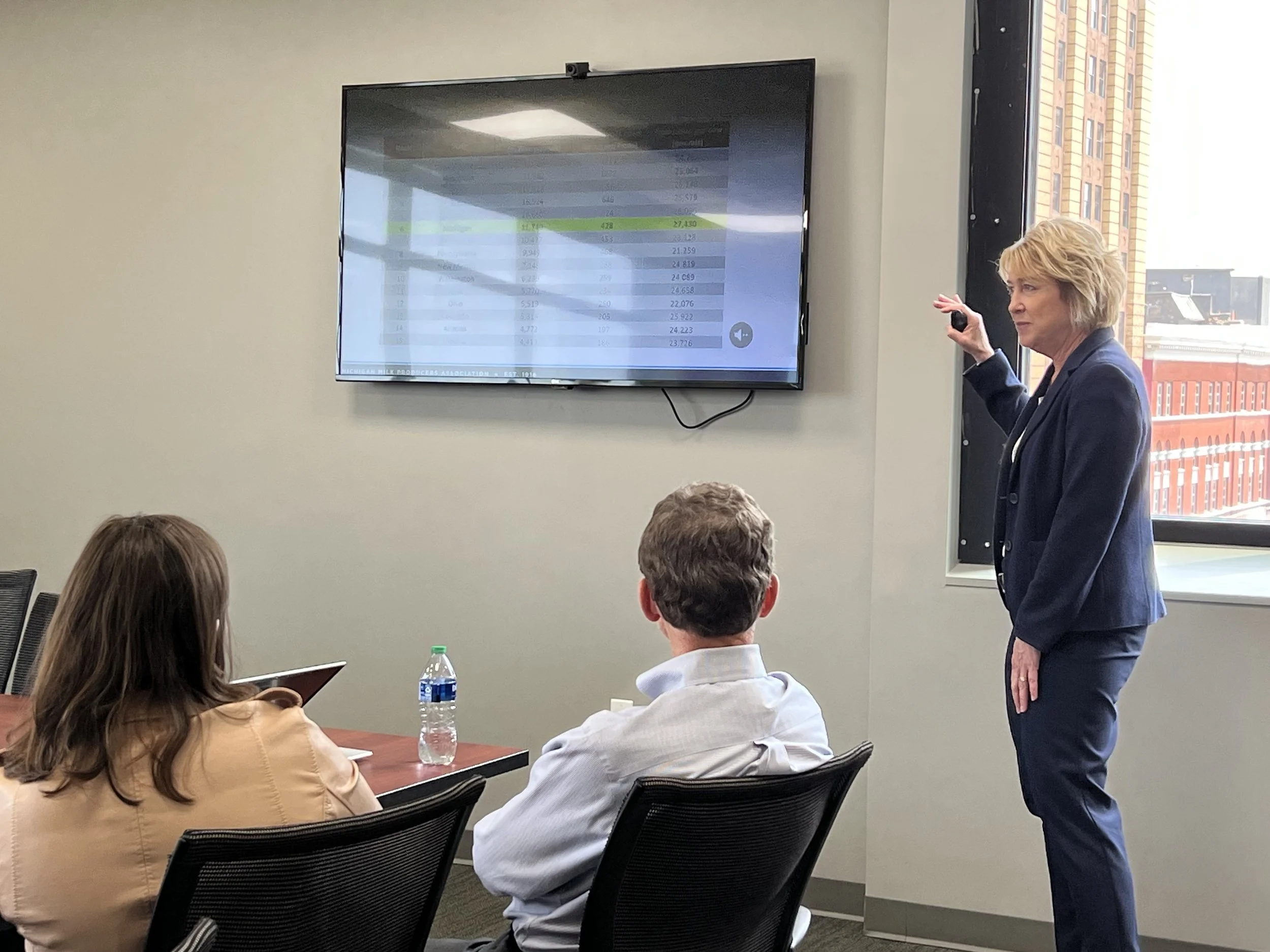
Each organization presented information about the background and mission of their group, priorities for the coming months and insightful updates about their sectors to those who attended the Lunch & Learn at Senate Binsfield Office Building in Lansing. Those who participated in the event on Monday, included:

·         Becky Taylor, vice president of Loan Administration and Legislative Affairs of GreenStone Farm Credit Services

·         Chuck Lippstreu, President of Michigan Agri-Business Association

·         Sheila Burkhardt, chief corporate affairs officer for Michigan Milk Producers Association

·         Mary Kelpinski, CEO of Michigan Pork Producers Association

·         Dianne Byrum, Agricultural Leaders of Michigan

Mary Kelpinski, CEO of Michigan Pork Producers Association, presents information about her organization and membership. 

Sheila Burkhardt, chief corporate affairs officer for Michigan Milk Producers Association, talks about MMPA. 

Chuck Lippstreu, President of Michigan Agri-Business Association, talks about MABA.

Becky Taylor, vice president of Loan Administration and Legislative Affairs of GreenStone Farm Credit Services, addresses the group.  

Michigan agricultural groups meet with supporters, discuss priorities with members of Congress in Washington, D.C.

U.S. Sen. Stabenow, U.S. Representatives attend Michigan Ag Club Breakfast with agri-business, lenders as well as pork, milk producers

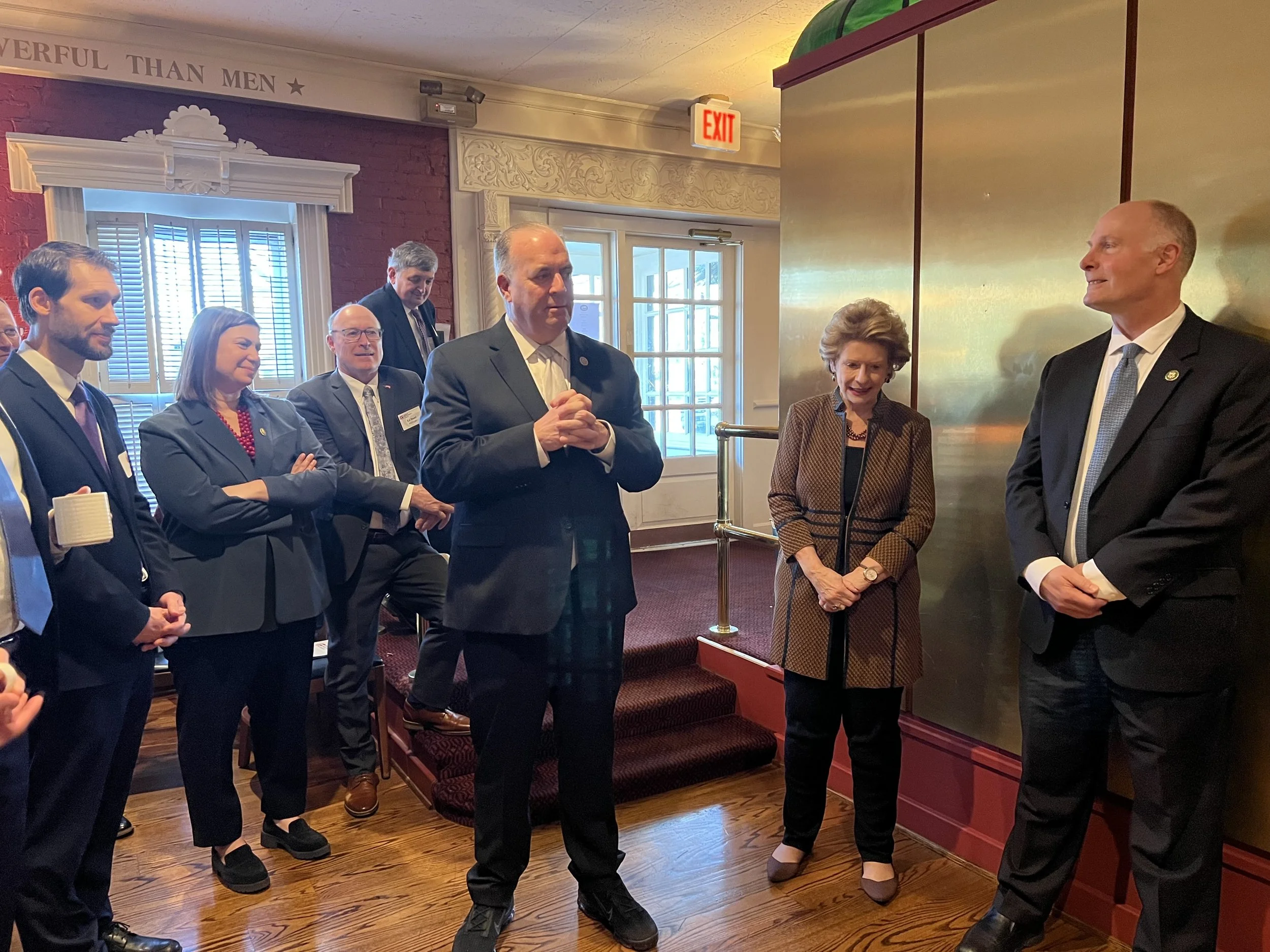
U.S. Rep. Dan Kildee, D-Flint Township, speaks to the group assembled for the Michigan Ag Club Breakfast on Wednesday, March 29, in Washington, D.C., as others look on, including U.S. Rep. John Molenaar, R-Midland; U.S. Sen. Debbie Stabenow, D-Michigan, and chairwoman of the Senate Committee on Agriculture, Nutrition and Forestry; and U.S. Rep. Elissa Slotkin, a Lansing Democrat and a member of the House Agriculture Committee.

LANSING, Mich. — Agricultural business groups, including those representing lenders, agri-business as well as milk and pork producers, that make up Agricultural Leaders of Michigan met Wednesday with members of Congress and others in Washington, D.C., to discuss the state’s growing agriculture sector and related priorities and opportunities.

Wednesday’s Michigan Ag Club Breakfast in Washington, D.C., marked the return of the annual event after a hiatus of a few years. Groups and businesses in attendance are advocating on behalf of member farmers and organizations, while also monitoring developments related to the 2023 Farm Bill. Among those at the event on Wednesday were U.S. Sen. Debbie Stabenow, D-Michigan, who is chairwoman of the Senate Committee on Agriculture, Nutrition and Forestry, as well as U.S. Rep. Elissa Slotkin, a Lansing Democrat and a member of the House Agriculture Committee.

Michigan’s agricultural industry is critical to the state’s overall economy as it employs 805,000 people, which is 17.2 percent of the state’s population, and contributes $104.7 billion to Michigan’s economy each year.

This year, agricultural business groups are focused on efforts to build the labor force in Michigan, to continue to make investments in infrastructure and to balance a number of financial variables, including inflation, interest rates and labor.

“We’re thrilled to have the opportunity to meet with members of Congress who have a hand in funding and policy that directly affects the agricultural sector and the work our member farmers and organizations do every day. We look forward to continued dialogue with our valued representatives in Washington, D.C., and we remain deeply appreciative of Sen. Stabenow’s dedicated leadership on the Farm Bill, which is critically important to the success of the agriculture industry in Michigan and across the country,” said the member organizations of Agricultural Leaders of Michigan, which includes the Michigan Agri-Business Association, GreenStone Farm Credit Services, Michigan Pork Producers and Michigan Milk Producers Association.

Chuck Lippstreu, president of Michigan Agri-Business Association, with U.S. Rep. Jack Bergman, R-Watersmeet.  

Mary Kelpinski, CEO of Michigan Pork Producers, and Joe Diglio, President and CEO of Michigan Milk Producers Association, talk with U.S. Rep. Elissa Slotkin, D-Lansing.

Travis Jones, President & CEO of GreenStone Farm Credit Services, talks with U.S. Rep. Hillary Scholten, D-Grand Rapids.

U.S. Sen. Debbie Stabenow, D-Michigan, speaks to the group assembled for the Michigan Ag Club Breakfast as U.S. Rep. John Molenaar, R-Midland, looks on.


Michigan organizations highlight issues on the horizon for the agricultural industry

LANSING, Mich. — Agricultural groups, including those that represent lenders, agri-business as well as milk and pork producers, that make up Agricultural Leaders of Michigan gathered on Monday to talk about issues facing their industry in Michigan.

Monday’s Zoom press conference comes as the state is marking Michigan Food and Agriculture Month in March and National Ag Day is March 21.

Agricultural groups and businesses are keeping a close eye on developments related to the 2023 Farm Bill as that sweeping spending bill moves through the Senate Committee on Agriculture, Nutrition and Forestry under the leadership of chairwoman and U.S. Sen. Debbie Stabenow, D-Michigan. Another member of Congress from Michigan, U.S. Rep. Elissa Slotkin, D-Lansing, is a member of the House Agriculture Committee.

Michigan’s agricultural industry is particularly important to the state’s overall economy as it employs 805,000 people, which is 17.2 percent of the state’s population, and it contributes $104.7 billion to Michigan’s economy each year.

“Agriculture is a bright spot in our state’s growing economy, and we urge policy leaders focus on addressing the infrastructure and workforce challenges that could stand in the way of future opportunity,” said Chuck Lippstreu, president of Michigan Agri-Business Association.

A recording of the press conference is available online at youtu.be/LAEi4wRyKmc.

In 2023, agricultural business groups are focused on efforts to build the labor force in Michigan, to continue to make investments in infrastructure and to balance a number of financial variables, including inflation, interest rates and labor.

“Today’s agricultural economy has plenty of exciting opportunities on the horizon,” said Travis Jones, President & CEO of GreenStone Farm Credit Services. “It’s encouraging to see so many programs, resources and tools put in place to help those who have aspirations in agriculture so they can flourish in this critical industry.”

Over the past several years, the swine industry has been preparing for foreign animal disease outbreaks. Michigan pork producers are working to create safe supply plans to keep farms safe from disease in the future and it’s important to keep up federal funding for preventative measures, including the so-called Beagle Brigade at airports, dogs that are trained to find illegal pork products that people are trying to smuggle into the country on commercial flights.

“With nearly 2.5 million pigs produced annually in the state, the pork industry in Michigan is very healthy,” said Mary Kelpinski, CEO of Michigan Pork Producers. “Our producers are deeply committed to the safety of our hog supply and we look forward to working with state officials on continuing to keep the pork supply safe.”     

The milk and dairy sector of the agricultural industry called on state leaders to continue their investment infrastructure across Michigan.

“To move milk and dairy products across Michigan, we need reliable infrastructure – good roads and bridges,” said Joe Diglio, President and CEO of Michigan Milk Producers Association. “We also are looking forward to working with our partners at the state and federal level to help us increase year-round labor.”   



Michigan agricultural, chemistry industries call for Congress to intervene on rail labor dispute

Rail network shutdown would be catastrophic for Michigan businesses

LANSING, Mich. – Leaders of trade organizations representing hundreds of Michigan businesses today called on Congress to intervene in the rail labor dispute that threatens to shut down America’s freight rail network in early December.

“A rail strike would be devastating for Michigan’s economy and cannot be allowed to occur,” said Chuck Lippstreu, president of the Michigan Agri-Business Association. “Michigan agriculture is a leading economic engine for our state, pumping more than $100 billion into our economy every year. Rural businesses depend on rail to move grain, fertilizer and many other products. A rail strike would pile on to existing logistics challenges in our industry and snarl the agricultural supply chain.”

“Rail service is essential to the transportation of chemicals key to manufacturers of all kinds, as well as water treatment, refining and electricity generation,” said John Dulmes, executive director of the Michigan Chemistry Council. “The business of chemistry would be among the first impacted, and hardest-hit, in the event of a rail network shutdown, and we are counting on Congress to act.”

In September, the Biden administration helped broker tentative contract agreements between major rail carriers and their labor unions. Unfortunately, these agreements have been rejected by several unions. The ‘status quo’ period where unions have agreed to continue working ends Friday, Dec. 9. With no work agreement and no Congressional action, a strike would begin. Certain commodities shipped by rail could start to be embargoed as soon as this weekend.

President Joe Biden yesterday called for Congress to intervene and approve the contract agreements reached in September.

Dulmes said chemical manufacturers in Michigan rely on regular rail shipments to operate and would face potential disruptions within days of a strike. Chemicals transported by rail support industries – including automotive, semiconductor and steel production – accounting for 4% of GDP. Freight rail is also needed to deliver essential services to people across Michigan, particularly for chlorine and other water treatment chemicals.

A rail strike would also be a major disruption for rural Michigan, Lippstreu noted, with grain and fertilizer transportation, and access to export markets of particular concern. A wide range of Michigan-grown products are sent by rail to markets across the nation and to export terminals. Additionally, Michigan farm supply retailers depend on rail service for fertilizer shipments, and a rail strike would further tangle fertilizer supply chains that have faced historic disruption in recent years.

A rail strike would amplify existing rail service problems faced by Michigan and U.S. businesses that primarily stem from national ‘Class I’ freight rail carriers. These rail service disruptions were recently termed a “service meltdown” by the chairman of the U.S. Surface Transportation Board.

“Our industries and many others need reliable, timely rail transportation service, and this threat of a rail strike is the latest potential disruption faced by Michigan businesses,” said Dulmes. “Long-term reforms are still needed to ensure the viability of freight rail, but a rail strike would be a huge setback and greatly amplify existing problems in the network. We are counting on Congress to act without delay and avert such a disruption.”

# # #

About the Michigan Agri-Business Association: The Michigan Agri-Business Association serves as a strong advocate and dedicated resource for Michigan’s food and agriculture sector. The Association’s 300 members span the agricultural value chain. They include retailers that provide seed, fertilizer, crop protection and technology to farmers; businesses that handle and export grain; animal feed suppliers; food processors; logistics companies and beyond. Learn more at www.miagbiz.org.

About the Michigan Chemistry Council: The Michigan Chemistry Council, established in 1967, represents Michigan’s chemical manufacturers, formulators and distributors. Chemistry is one of Michigan’s largest manufacturing sectors, supporting more than 80,000 Michigan jobs and directly impacting more than 96% of all manufactured goods. Chemical products are one of the leading categories of freight rail moved in Michigan. Learn more at www.michiganchemistry.com.


Agricultural Leaders of Michigan host virtual forum with legislative candidates

Legislative candidates had opportunities in September and October to learn more about Michigan agriculture as they prepare to engage with the farming and rural communities across the state.

During these virtual presentations, representatives from Michigan Milk Producers, Michigan Pork Producers, GreenStone Farm Credit Services and Michigan Agri-business Association provided a quick overview of their organizations and laid out key issues facing their members.

These forums offered a chance for candidates to meet the leadership in the ag industry and have their questions answered by experts in the field. The October forum can be viewed https://youtu.be/RUcm3LFtUwg.